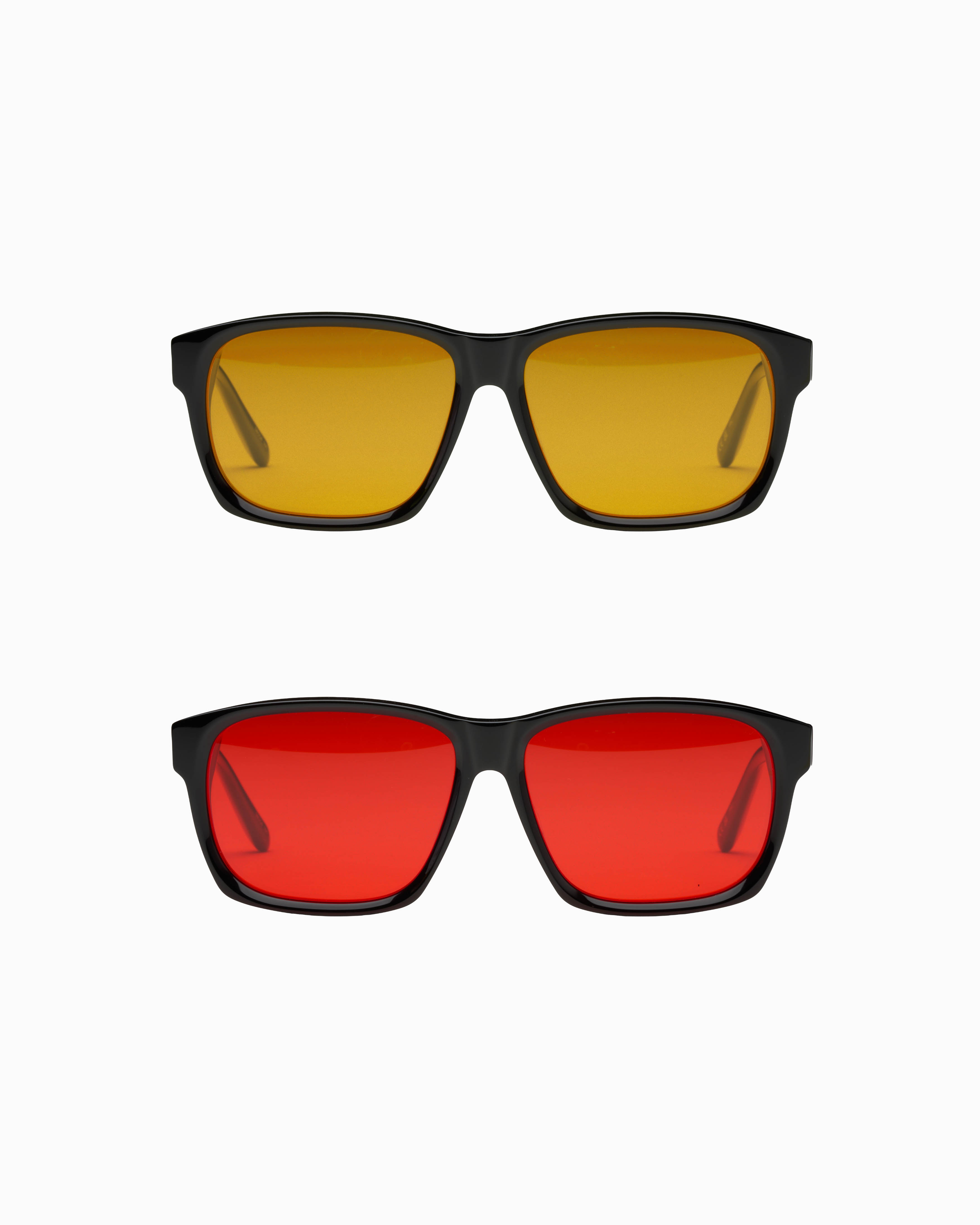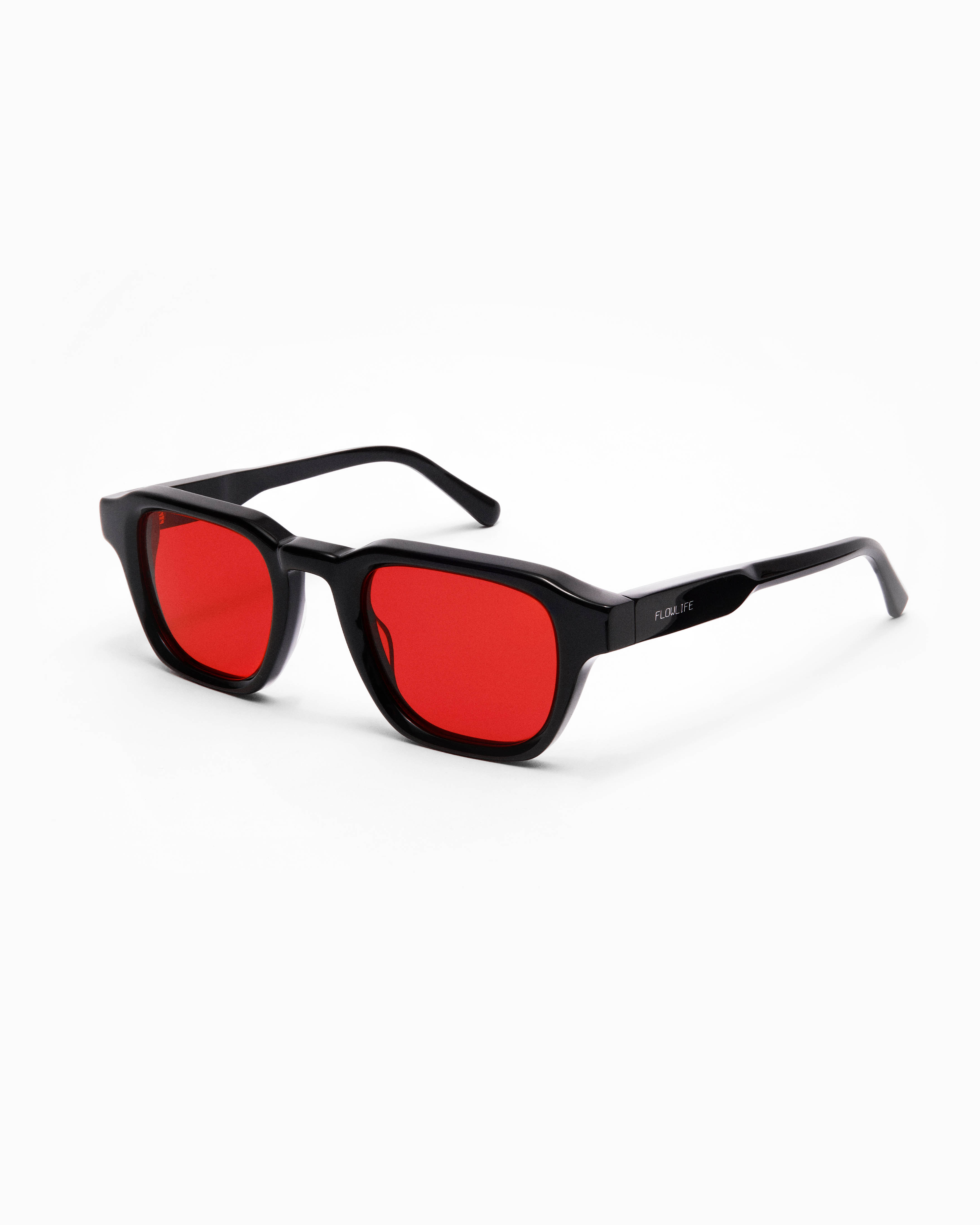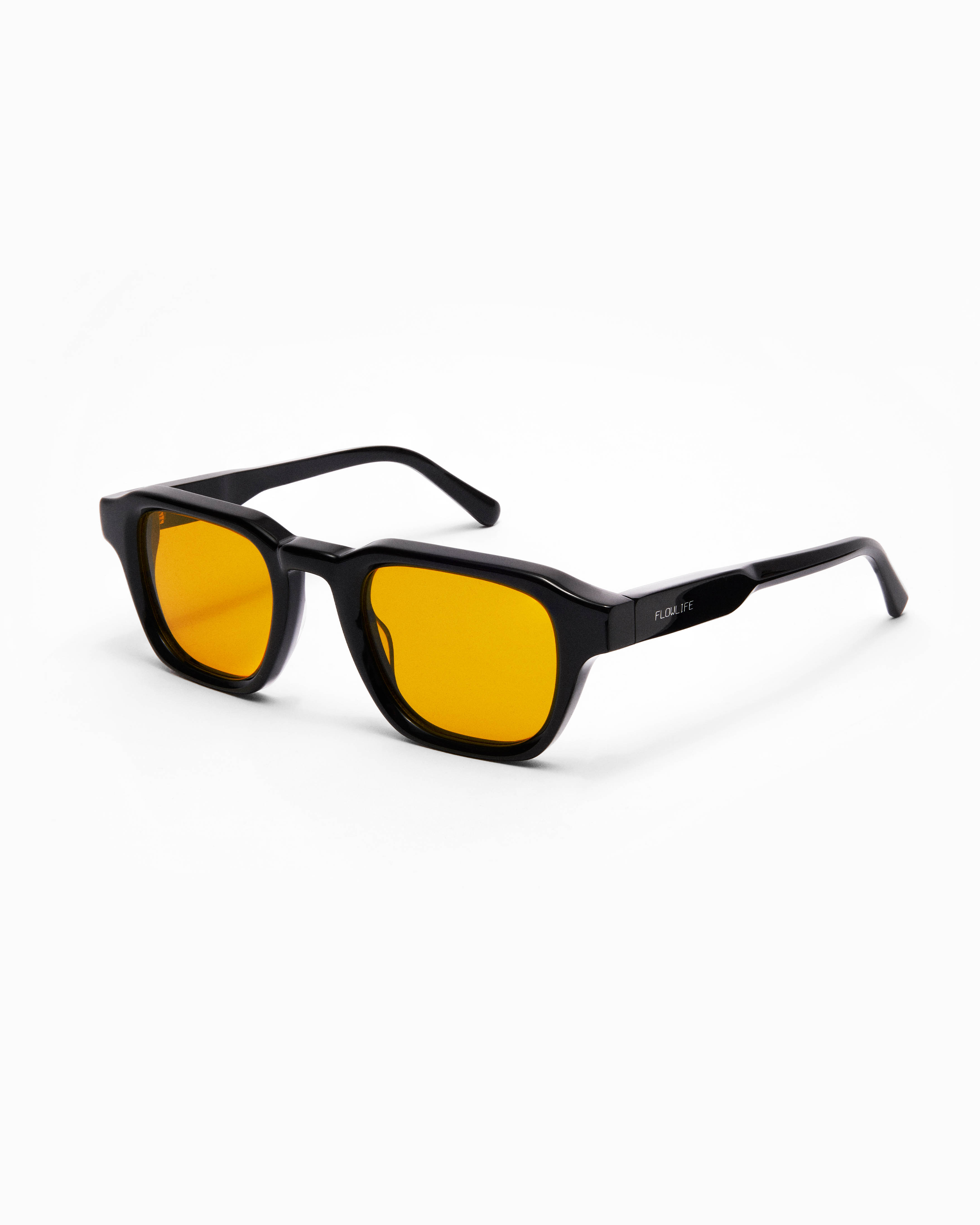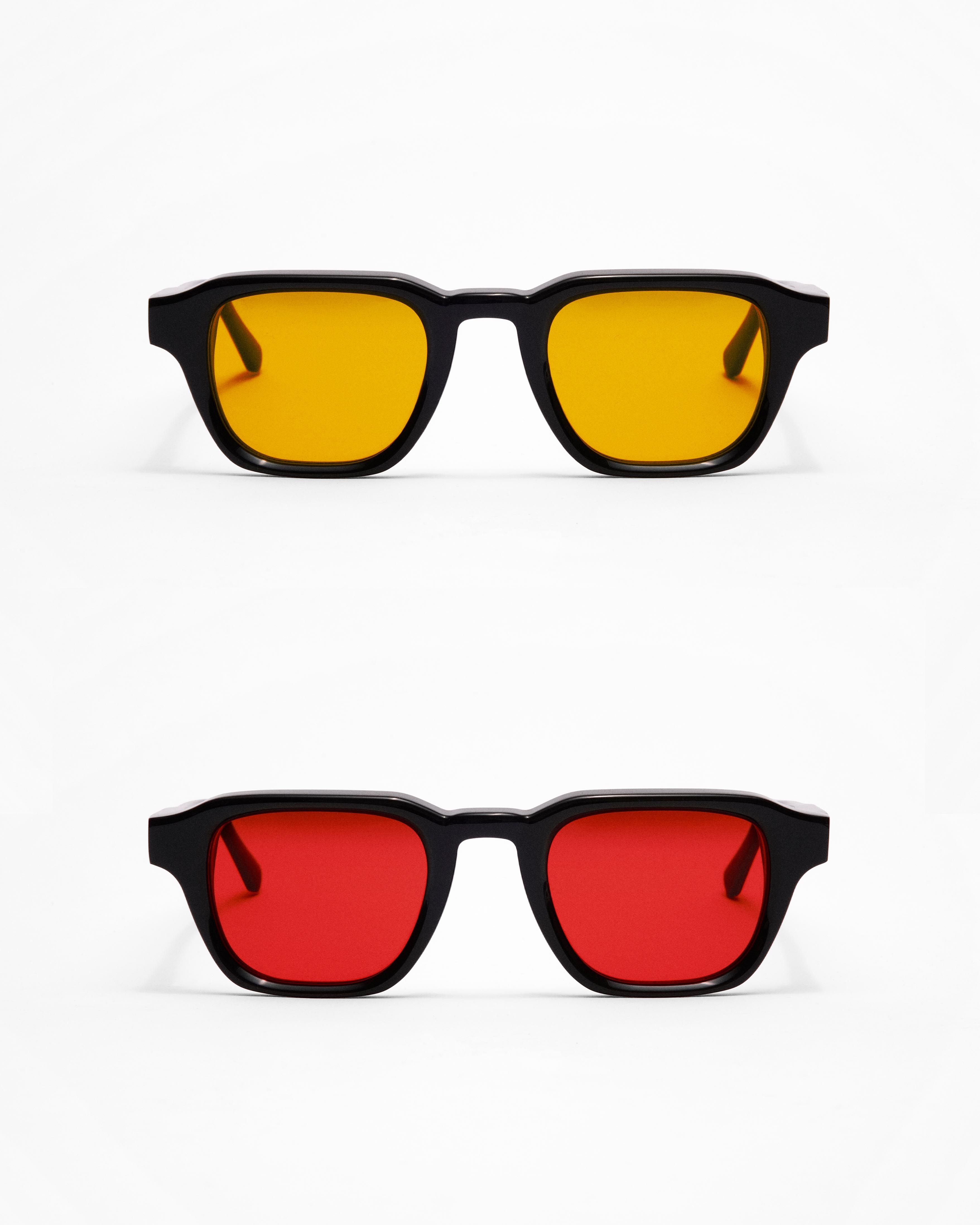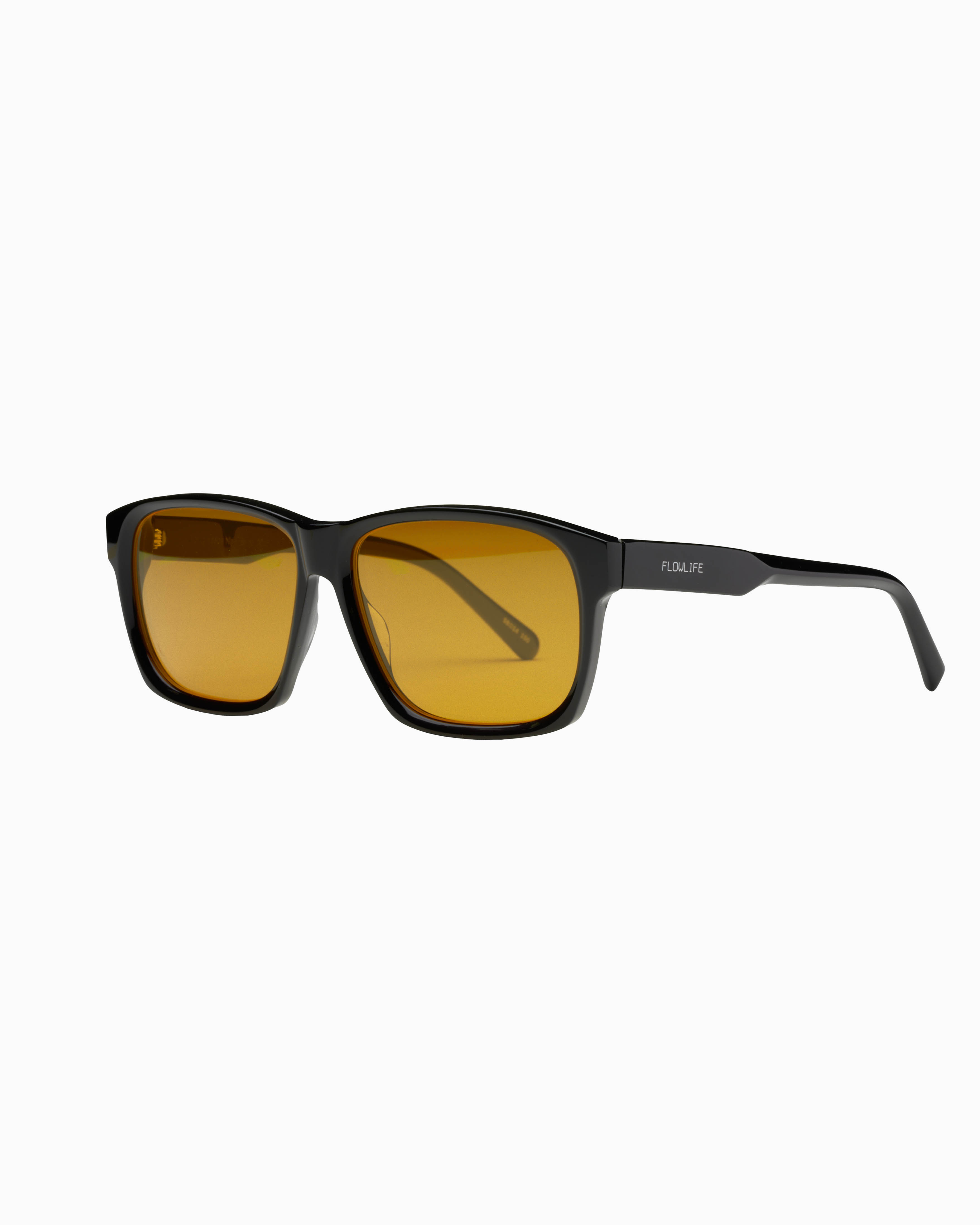
Flowglasses Day Sync 02 - Álvaro Edition
119 EUR

Science
Light filtering therapy works by blocking specific wavelengths of artificial light that disrupt the body's internal clock. Blue and green light from screens, LEDs, and fluorescent lighting suppresses melatonin production and delays sleep onset by signalling to the brain that it is still daytime. Filtering these wavelengths in the hours before sleep restores the natural hormonal rhythm that governs sleep quality, energy levels, and long-term health.
FAQ
How does light filtering therapy work?
Does blue light actually disrupt sleep?
What is the difference between blue light glasses and screen filters?
When should light filtering glasses be put on in the evening?
Can light filtering therapy improve athletic recovery?
How does light filtering therapy differ from melatonin supplements?
Should light filtering glasses be worn during the day?
Can light filtering therapy help with seasonal mood changes?
Is light filtering therapy safe?
How does light filtering therapy relate to red light therapy?
Light filtering therapy works by blocking the specific wavelengths of light, primarily blue and green, between 400 and 550 nanometres, that tell the brain it is still daytime, preventing them from suppressing melatonin and delaying the body's natural sleep signal.
The body's internal clock is set by light. Deep in the eye, a specialized type of cell, not responsible for vision but for detecting day and night, responds to blue and green wavelengths and sends signals directly to the brain's master clock in the hypothalamus. When these cells detect blue and green light in the evening, they interpret it as daylight and send a "stay awake" signal to the pineal gland, which stops it from releasing melatonin. Melatonin is the hormone that signals to the body that night has arrived and it's time to sleep. Block the blue and green light, and melatonin can rise on its natural schedule, which means you fall asleep more easily, sleep more deeply, and wake more rested.
Research consistently shows that light in the 400 to 550 nanometre range, 2 to 3 hours before sleep, suppresses melatonin by 50% or more and delays sleep onset. Studies confirm that blocking these wavelengths with filtering lenses significantly reduces melatonin suppression, improves sleep onset, and increases total sleep time.
Light filtering glasses worn in the hours before sleep produce measurable improvements in melatonin levels and sleep onset time. The effect strengthens with consistent nightly use as the body's internal clock stabilizes.
Explore
Yes, blue light disrupts sleep through a well-documented mechanism, and the research evidence is consistent across laboratory studies and real-world settings.
The eye contains specialized cells that have nothing to do with vision. Their only job is to detect whether it is day or night. These cells are most sensitive to blue light around 480 nanometres, but also respond to green light up to around 550 nanometres. Modern artificial lighting, screens, LEDs, and fluorescent lights emit a blue-rich spectrum that these cells cannot distinguish from daylight. The result is that your brain receives a "it's still daytime" signal for hours after the sun has set, melatonin is suppressed, and sleep onset is delayed.
Research confirms consistently that blue light exposure 2 to 3 hours before sleep suppresses melatonin by 50% or more and delays sleep onset by 30 to 60 minutes. Studies replicate these effects in healthy adults, teenagers, and older populations both in laboratory and real-world conditions.
Reducing blue light exposure 2 to 3 hours before bed, through light filtering glasses, reduced screen brightness, and warmer lighting choices, produces progressive improvements in sleep quality and circadian stability with consistent use.
Explore

Light filtering glasses protect against all light sources in the environment, room lighting, TV, and ambient light. Screen filters only block light from one specific device. For sleep purposes, glasses provide far more complete protection.
The cells in the eye that detect day and night integrate light input from the entire visual field, not just from the screen in front of you. Screen filters reduce blue light from the device they're applied to, but leave you exposed to room lighting, other screens, and other artificial light sources in your environment. Light filtering glasses block all incoming light in the problematic spectrum regardless of where it comes from, providing complete melatonin protection rather than partial reduction.
Research comparing screen filters and light filtering glasses consistently shows that glasses produce stronger melatonin preservation and more significant sleep improvements, attributed to their complete protection against all light sources rather than a single device.
Light filtering glasses with amber or red lenses provide the strongest protection against melatonin suppression. Glasses with light yellow lenses provide moderate protection. Screen filters are a complement to glasses, not a substitute.
Explore

2 to 3 hours before your planned sleep time, this gives melatonin enough time to rise to sleep-promoting levels before you go to bed.
The internal clock responds to light cumulatively throughout the evening; it's not just the final hour before bed that matters. Starting to filter blue light 2 hours before bed gives melatonin enough time to rise to the levels needed for natural sleep onset. Starting 3 hours before provides additional benefit, particularly for people with significant sleep difficulties or a strongly delayed internal clock. The earlier you start, the more complete the circadian preparation by the time you close your eyes.
Research confirms that 2 to 3 hours of blue light filtering before sleep produces significantly greater sleep improvements than 1 hour of filtering. Studies confirm that consistently filtering blue light each evening stabilizes the circadian phase across weeks.
Put light filtering glasses on 2 to 3 hours before your normal bedtime. Combine with dimmer room lighting and reduced screen brightness for maximum effect. Consistency every evening produces stronger cumulative sleep improvements.
Explore

Light filtering therapy indirectly improves athletic recovery by enhancing sleep quality and quantity, which are the primary drivers of muscle repair, hormonal recovery, and cognitive function.
Growth hormone, the key anabolic hormone for muscle repair, is released primarily during deep sleep and is tightly correlated with sleep quality and duration. Cortisol, the stress hormone that impairs recovery, falls during adequate sleep and rises with sleep deprivation. Better sleep through light filtering therapy amplifies growth hormone secretion, reduces cortisol, and supports the neurochemical balance that maintains motivation and mental sharpness during training. Athletes with consistent sleep quality achieve faster muscle hypertrophy, better performance retention, and lower injury risk.
Research confirms that sleep deprivation significantly reduces athletic performance, reaction times, and decision-making ability. Studies show that improved sleep protocols, including blue light filtering, improve athletic performance metrics and subjective recovery.
Integrate light filtering glasses as a standard part of the evening routine for all athletes with high training frequency. Consistency is key. Sleep improvements accumulate over days and weeks of regular use.
Explore

Light filtering therapy preserves the body's own melatonin production by removing the artificial light that suppresses it. Melatonin supplements add external melatonin. The two work through different mechanisms and suit different situations.
Melatonin supplements bypass the normal melatonin production process and add a fixed dose to the bloodstream. They can be effective for jet lag and shift work, situations in which the circadian clock needs to be rapidly reset. But for everyday use, supplemental melatonin doesn't address the underlying problem, the light exposure that's preventing your body from making its own. Light filtering therapy removes that problem at the source, allowing the body to produce melatonin on its own schedule, at the dose and timing it determines are appropriate. The body's self-regulated melatonin production is more precisely timed and dosed than any supplement can replicate.
Research comparing light filtering with melatonin supplementation shows that both improve sleep onset, but through different mechanisms. Light filtering therapy produces more stable long-term circadian benefits. Melatonin supplements are more useful for acute timing corrections.
Use light filtering therapy for ongoing sleep optimization as part of a daily routine. Consider melatonin supplements for specific situations requiring rapid circadian adjustment, such as jet lag or shift work.
Explore

Daytime glasses with lighter filtering are designed to reduce eye strain during screen work, not to protect sleep. They use a gentler filter that reduces blue light enough to ease discomfort without suppressing the daytime alertness that blue light supports.
During the day, blue light isn't harmful to sleep; it's actually helpful, supporting the alertness and cortisol rhythm that keeps the circadian clock on schedule. Blocking it too aggressively during daylight hours would reduce alertness and potentially disrupt the circadian cycle's daytime phase. Daytime light filtering glasses use lighter coloured lenses, typically pale yellow, that reduce eye strain and glare from screens without eliminating the circadian signal from daylight. Evening glasses with amber or red lenses are designed for sleep protection and are not suitable for daytime use when alertness is needed.
Research confirms reduced subjective eye strain and improved visual comfort during prolonged screen use with daytime light filtering glasses. Studies confirm that lighter filtering glasses during the day do not disrupt sleep physiology.
Choose daytime glasses with light filtering for eye comfort during screen work. Switch to red lenses 2 to 3 hours before bed for sleep optimization. Combined day and evening use provides optimal eye health and sleep support.
Explore

Light filtering therapy in the evening, combined with bright light exposure in the morning, supports circadian rhythm regulation, which plays a central role in the mood disturbances that accompany seasonal changes in daylight.
Seasonal mood changes are closely linked to disruptions in the circadian rhythm caused by shorter winter days. When natural light exposure in the morning decreases, the circadian clock can drift, and the timing of key hormonal cycles, cortisol, melatonin, and serotonin, becomes less precise. Evening light filtering removes the artificial light that further confuses the clock by extending the "day" signal into the night. Used in combination with morning bright light exposure, which anchors the circadian phase, light filtering therapy supports a more stable and predictable hormonal rhythm that underlies mood stability.
Research on circadian rhythm regulation shows consistent associations between circadian disruption and mood disturbances, including seasonal affective disorder. Studies on light therapy interventions, both morning bright light and evening blue light restriction, confirm improvements in mood, energy, and sleep quality in affected populations.
For seasonal mood support, pair consistent evening light filtering with 15 to 30 minutes of bright light exposure each morning. The combination anchors the circadian clock at both ends of the day, producing the most robust effect on mood and energy.
Explore

Light filtering glasses are safe for everyone. They are a passive optical intervention; they simply filter specific wavelengths of light, with no systemic effects, no contraindications, and no adverse events reported in the research literature.
The lenses work by absorbing or reflecting specific wavelengths before they reach the retina. This optical filtering has no biological effects beyond changing which wavelengths of light enter the eye. There is no heat, no chemical, and no mechanical effect on the eye or surrounding tissue. Red lenses, which provide the strongest blue-light protection, have been used in clinical and athletic research without reported adverse effects.
No adverse effects from light filtering glasses have been reported in the research literature. Studies confirm that red lenses worn in the evening increase melatonin levels and improve sleep without disrupting visual function or eye health.
Light filtering glasses can be worn by anyone, at any age, without a medical consultation. Red lenses are most effective for evening sleep protection. Light yellow lenses are appropriate for daytime screen work.
Explore
Light filtering therapy and red light therapy both work through the effects of specific wavelengths of light on the body, but they target completely different biological systems. Light filtering therapy protects the circadian clock by blocking disruptive wavelengths. Red light therapy activates cellular repair by delivering therapeutic wavelengths.
Light filtering therapy targets specialized retinal cells that regulate the circadian clock by suppressing melatonin. Its effects are hormonal and circadian; the result is better sleep, a more stable cortisol rhythm, and improved mood. Red light therapy targets the energy-producing structures inside cells throughout the body. When these structures absorb near-infrared and red wavelengths, they produce more energy, reduce inflammation, and accelerate tissue repair. The two therapies operate through entirely different receptors, mechanisms, and biological targets.
Research on light filtering therapy consistently shows circadian and sleep effects. Research on red light therapy consistently shows cellular repair and anti-inflammatory effects. The two bodies of evidence are distinct and confirm that the therapies address different biological systems.
Red light therapy is most effective in the morning or early evening for recovery and cellular repair. Light filtering glasses are most effective in the final 2 to 3 hours before sleep. Morning red light therapy combined with evening light filtering produces complementary benefits across the full circadian cycle.
FAQ