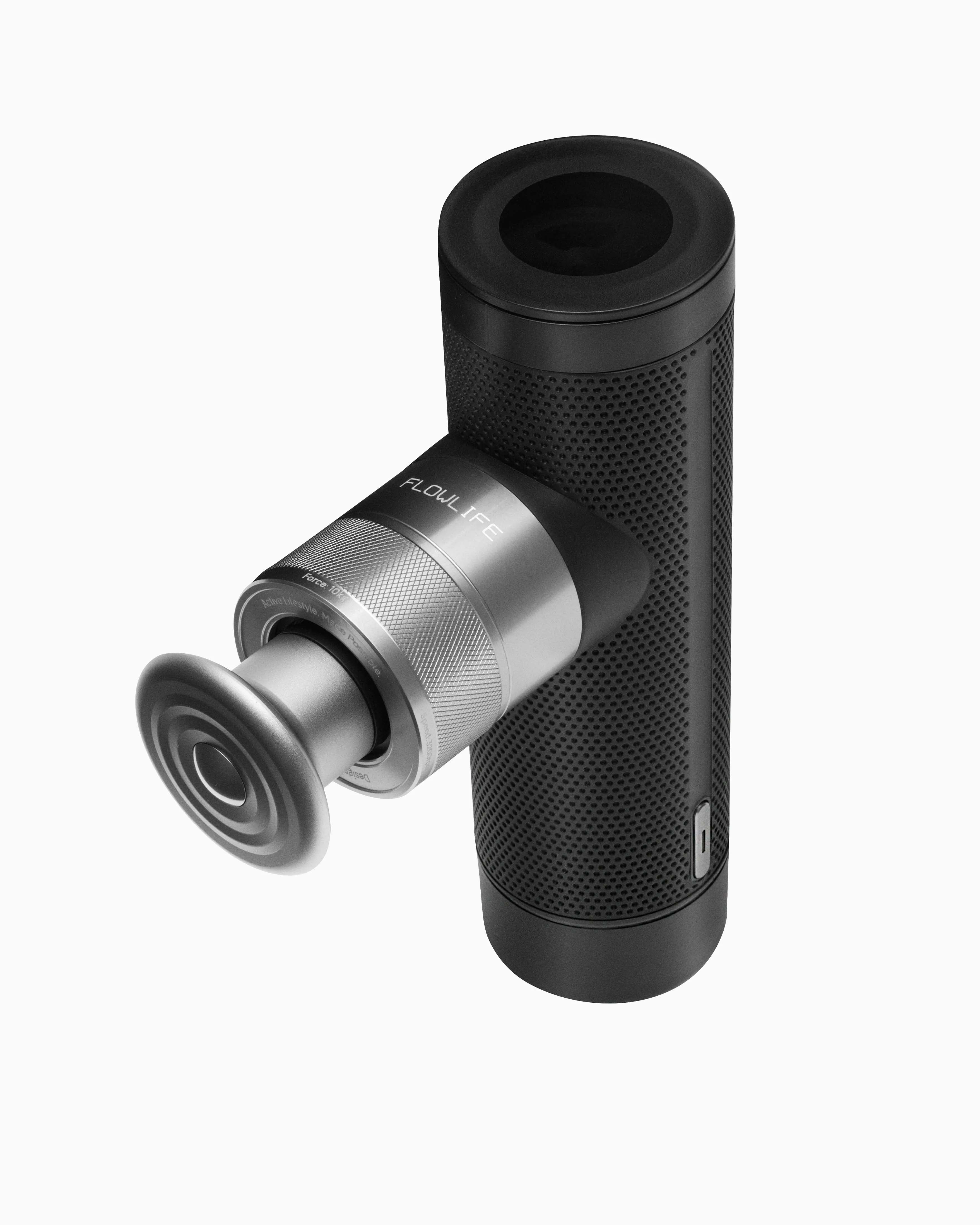
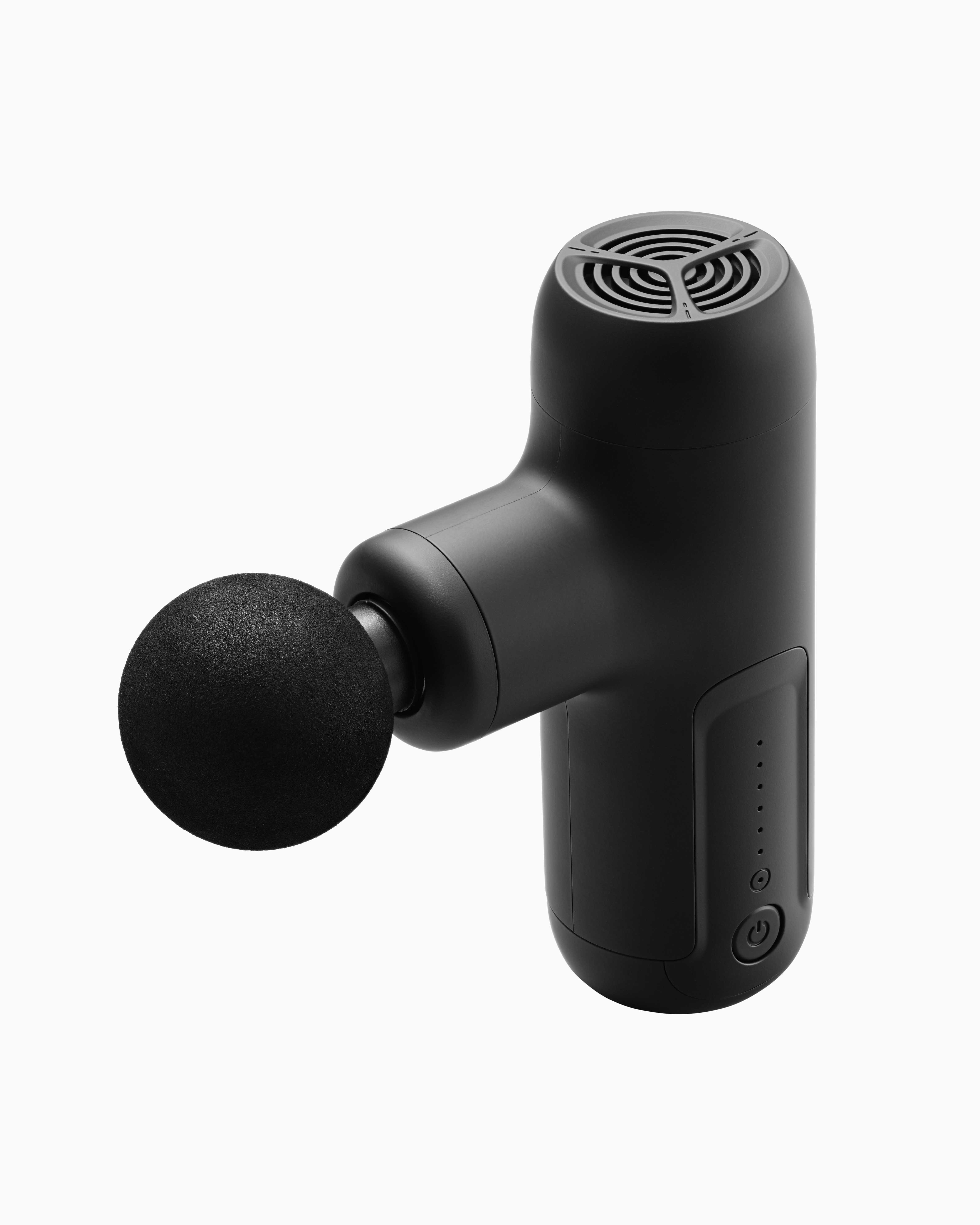
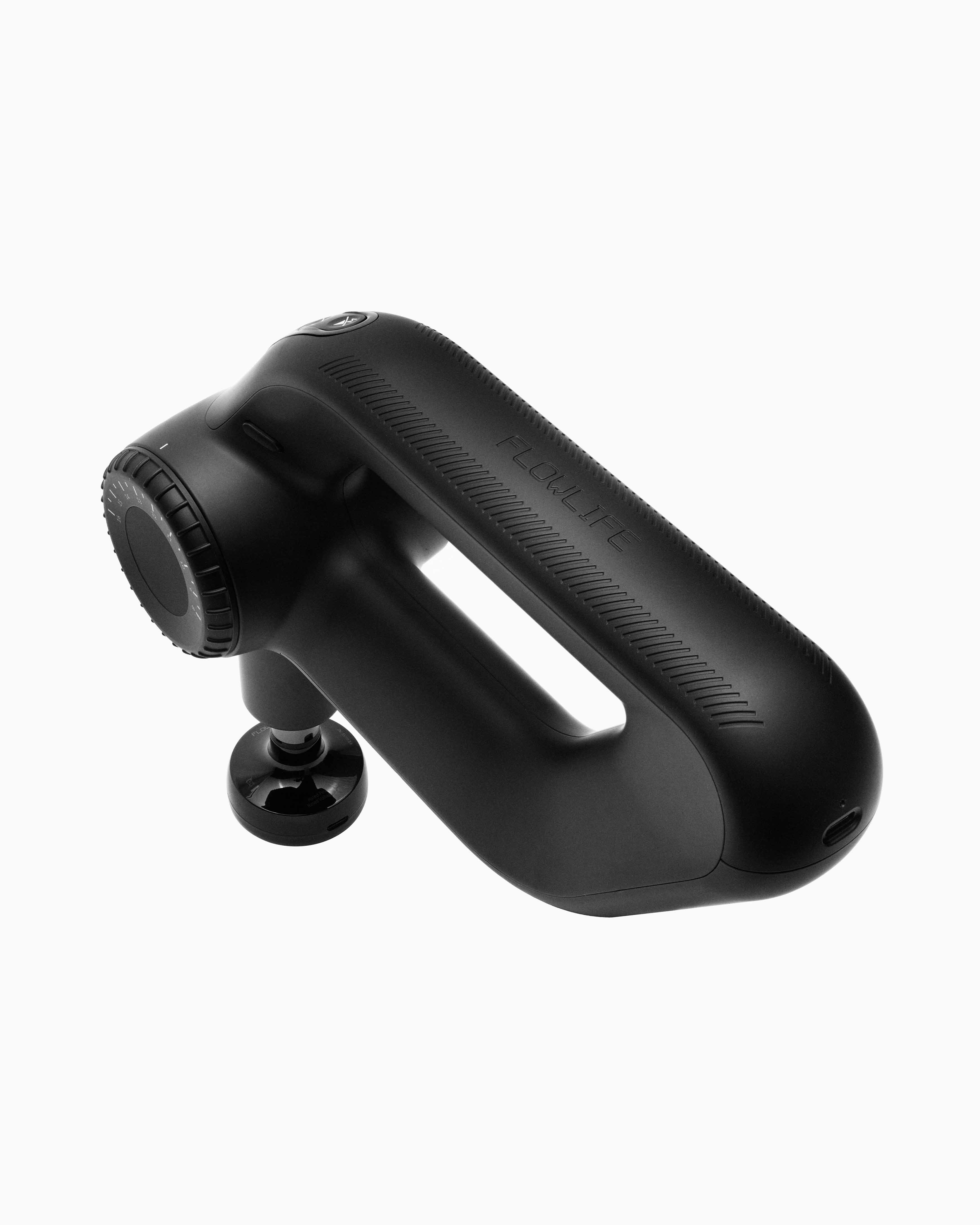
Flowgun Heat
Bestseller
1 999 NOK

Science
Percussion therapy delivers rapid, targeted bursts of mechanical force deep into muscle tissue, stimulating blood flow, releasing tension, and resetting the nervous system's control of muscle tone. Used before training to prepare tissue and after exercise to accelerate recovery, it is one of the most versatile and accessible recovery tools in modern sports medicine.
FAQ
How does percussion therapy work?
Does percussion therapy reduce muscle soreness?
Can percussion therapy improve range of motion and flexibility?
What is the best way to use percussion therapy before training?
How deep does percussion therapy penetrate?
Is percussion therapy safe?
How does percussion therapy compare to foam rolling?
Can percussion therapy help with injury recovery?
How often should percussion therapy be used?
Can percussion therapy improve performance?
Percussion therapy works by delivering rapid, repetitive bursts of mechanical force into muscle tissue at frequencies of 20 to 50 impacts per second, stimulating nerve receptors, increasing local blood flow, and releasing muscle tension.
Think of it like this: when you bang your elbow and immediately rub it, the rubbing sensation temporarily drowns out the pain. Percussion works on the same principle, but much faster and more intensely. The rapid impacts flood the area with so much sensory input that the pain and tension signals the nervous system is sending get temporarily overridden. At the same time, the mechanical force drives blood through the tissue, improving local circulation, and physically breaks up the tight, stuck patches in the connective tissue that cause stiffness.
Research consistently shows that percussion therapy increases local blood flow, reduces perceived muscle soreness, and improves range of motion in treated muscle groups. Studies confirm measurable reductions in DOMS following percussion therapy applied both before and after exercise.
1 to 3 minutes per muscle group is sufficient for a meaningful therapeutic response. Percussion therapy is effective both before training for tissue preparation and immediately after for recovery initiation.
Explore
Percussion therapy reduces muscle soreness by increasing blood flow to damaged tissue, clearing metabolic waste, and temporarily overriding pain signals in the affected area.
Soreness after training comes from small tears in muscle fibers, local inflammation, and the buildup of waste products in the surrounding tissue. Percussion applied in the hours after training speeds up circulation in the sore area, helping the body deliver fresh oxygen and nutrients while flushing out the compounds that cause pain and inflammation. It also engages the body's natural pain-reducing mechanism: enough mechanical stimulation at the right frequency tells the nervous system to dial down the soreness signals it is sending to the brain.
Studies show clear reductions in perceived soreness 24 and 48 hours after training in groups that used percussion therapy compared to passive recovery. Research also confirms lower levels of creatine kinase, a marker of muscle damage, and improvements in range of motion.
Apply percussion therapy to trained muscle groups within 30 to 60 minutes after training, spending 1 to 2 minutes per area at moderate intensity. A second session the following morning on sore areas further reduces soreness and accelerates recovery.

Percussion therapy improves range of motion by releasing tight tissue, reducing the nervous system's protective tension response, and increasing local circulation.
Much of what limits range of motion is not muscle length; it is the body holding back. Connective tissue gets stiff and stuck. The nervous system maintains tension as a protective reflex. Percussion works on both at once: the mechanical force directly breaks up the stuck tissue and improves how the layers slide against each other, while the sensory stimulation tells the nervous system to ease off its tension response. The more stimulation the muscle receives, the more the body relaxes its own resistance to movement. Improved circulation from the percussion also warms the tissue, making it more pliable.
Research shows clear increases in range of motion across major joints following percussion therapy, including the hip, shoulder, and ankle. Studies comparing percussion with static stretching show comparable or superior improvements, with percussion producing results faster.
Apply percussion therapy to target muscle groups for 1 to 2 minutes before stretching or mobility work. The combination of percussion followed by active stretching produces greater and more lasting improvements in range of motion than either approach alone.
Explore

Before training, percussion therapy acts as a neuromuscular warm-up, increasing blood flow to target muscles, improving tissue extensibility, and getting the nervous system ready for coordinated movement.
Cold or inactive muscle has reduced circulation, lower tissue temperature, and stiffer connective tissue. Percussion raises local temperature by increasing blood flow, loosens up tight connective tissue, and activates the neural connection between the brain and the muscles being prepared. The result is that the muscles are more responsive and better coordinated going into the session, and the risk of injury from unprepared tissue is reduced.
Research on pre-training percussion therapy shows improvements in muscle activation, movement speed, and strength output in treated muscle groups immediately following percussion sessions. Studies confirm reduced injury risk in cold tissue after percussion warm-up compared to no preparation.
Use percussion for 30 to 60 seconds per muscle group during warm-up, focusing on the muscles that will be loaded most in the session. Higher frequency and lighter pressure settings are most effective for pre-training activation.
Explore

Percussion therapy penetrates 10 to 16 millimeters into muscle tissue, reaching the superficial and mid-layer muscle fibers and the connective tissue between muscle groups, but not the deepest muscle structures or joint tissue.
Penetration depth depends on the force applied, frequency, and the attachment used. Standard round attachments distribute force broadly and penetrate 10 to 12mm. Ball or cone attachments concentrate force on a smaller area and can reach up to 16mm. That is enough to address most of the tight spots and stuck tissue that cause stiffness, and to reach the small blood vessels that supply working muscles. For deeper structures like the hip rotators, thoracic spine, and deep hip flexors, percussion has limited reach.
Imaging studies confirm that percussion therapy produces mechanical deformation in tissue to depths consistent with 10 to 16mm, with stronger effects on surface tension and circulation than on deep joint structures.
Use percussion for superficial muscle groups and connective tissue. For deeper structures, complement percussion with other tools. Ball attachments work best for specific tight spots. Round attachments work best for treating broad muscle areas.
Explore

Percussion therapy is safe for healthy individuals when applied at appropriate frequencies and pressures on soft tissue. Direct application over bones, joints, nerves, varicose veins, or inflamed tissue should be avoided.
At recommended settings, percussion stimulates sensory receptors and improves circulation without damaging the underlying tissue. Too much pressure over a bony area or joint can cause bruising or discomfort. Applying percussion directly to a nerve can cause temporary numbness or a radiating sensation. Most modern devices include adjustable speed and pressure settings so users can find a comfortable intensity.
Percussion therapy has a strong safety record in both athletic and clinical use when applied according to device guidelines. Adverse events are rare and typically occur from applying the device to areas it should not be used on.
Avoid applying percussion directly over bones, joints, the spine, varicose veins, open wounds, or acute injuries. Start at lower speed settings and increase gradually. Limit sessions to 1 to 3 minutes per muscle group.
Explore
Percussion therapy and foam rolling both address muscle tension and improve range of motion, but percussion delivers targeted force without requiring bodyweight loading and produces faster, more localized results.
Foam rolling uses your bodyweight to apply sustained pressure along the length of a muscle. It works well for broad areas but is slow and difficult to use on some body parts. Percussion delivers rapid mechanical impulses at a specific point without needing to bear weight, making it easier to use on areas like the upper back and shoulders. It also works faster: percussion breaks up tight tissue and floods the area with sensory input in a fraction of the time it takes foam rolling to produce a similar effect.
Studies comparing foam rolling and percussion show comparable improvements in range of motion, with percussion producing results faster. Foam rolling may be more effective for broad, widespread tension release across large muscle groups, while percussion is better for specific tight spots and pre-training activation.
Foam rolling is effective for general warm-up preparation of large muscle groups. Percussion is more effective for targeted tight spots, post-training soreness, and for areas that are hard to reach with a foam roller.

Percussion therapy supports injury recovery in the weeks after the initial acute phase by improving circulation to healing tissue, reducing scar tissue formation, and maintaining the health of surrounding muscle groups during periods of reduced activity.
In the first 48 to 72 hours after an acute injury, percussion should not be applied directly to the injured area. Once the acute inflammation has settled, percussion used around the injury site improves local blood flow, supports the tissue remodeling process, and helps prevent the formation of scar tissue that can limit movement long-term. During rehabilitation, when the injured area cannot be trained, percussion on the surrounding muscles keeps them healthy and mobile.
Research on soft tissue rehabilitation confirms that mechanical stimulation during the recovery phase promotes more organized tissue repair and reduces problematic scar formation. Studies confirm that percussion applied to surrounding muscles during rehabilitation helps maintain function and speeds up return to full activity.
Avoid percussion over acute injuries in the first 48 to 72 hours. After the acute phase, use percussion on the surrounding tissue to maintain circulation and mobility. Always follow medical guidance for serious injuries before integrating percussion into rehabilitation.
Explore

Percussion therapy can be used daily as part of a recovery protocol. Sessions of 1 to 3 minutes per muscle group, applied before and after training, produce consistent benefits without overstimulating tissue.
The body adapts to repeated stimulation. Using percussion too intensively on the same area over a short period reduces the effect, because the nervous system stops responding to a stimulus it has become used to. Spreading sessions throughout the day or across different muscle groups keeps the response fresh. Daily use across multiple muscle groups in pre-training and post-training roles does not carry the same adaptation risk.
Research protocols apply percussion consistently before and after training without reporting adverse effects from daily use. Studies confirm that regular use produces cumulative improvements in tissue health, range of motion, and recovery quality throughout a training cycle.
Use percussion for 30 to 60 seconds per muscle group before training and 1 to 2 minutes per group after training. Avoid spending more than 3 minutes continuously on a single area. Daily use across multiple muscle groups is safe and effective.
Explore

Percussion therapy improves performance by preparing muscle tissue for training, reducing the residual fatigue that carries over between sessions, and maintaining tissue quality throughout a competition or training cycle.
Before training, percussion gets the muscles neurologically ready: blood flow increases, tissue loosens up, and the connection between the brain and the target muscles sharpens. The result is better coordination and more precise activation during the session itself. After training, percussion helps clear the waste products that build up in fatigued muscle and reduces the tension that, if left unaddressed, progressively degrades the quality of subsequent sessions. Regular use across a training cycle prevents the cumulative stiffness and tight spots that limit output over time.
Research shows improved strength, power output, and movement speed in muscle groups treated with pre-training percussion compared to untreated controls. Studies in team sport athletes show improved sprint performance and lower perceived effort following regular percussion recovery protocols.
Integrate percussion as a consistent pre- and post-training tool rather than using it only when soreness becomes noticeable. Consistent use across a training cycle produces cumulative performance benefits that reactive use does not.

FAQ
Explore